
I recently came across a BBC article titled “Is fibre the new protein? The surprising health benefits of the latest wellness trend” and I have to say, it made me genuinely excited to see fibre finally getting some well-deserved mainstream attention.
After years of protein being the star of the nutrition world (protein bars, protein coffee, protein everything!), it’s refreshing to see the conversation shift toward fibre, a nutrient that quietly supports gut health, blood sugar balance, immunity, and even mental wellbeing. This isn’t just another social media trend; it’s backed by decades of research.
Most adults are encouraged to aim for around 30 grams of fibre per day, yet the average intake is closer to half that. With modern diets leaning heavily toward ultra-processed foods, it’s no surprise fibre has been left behind.
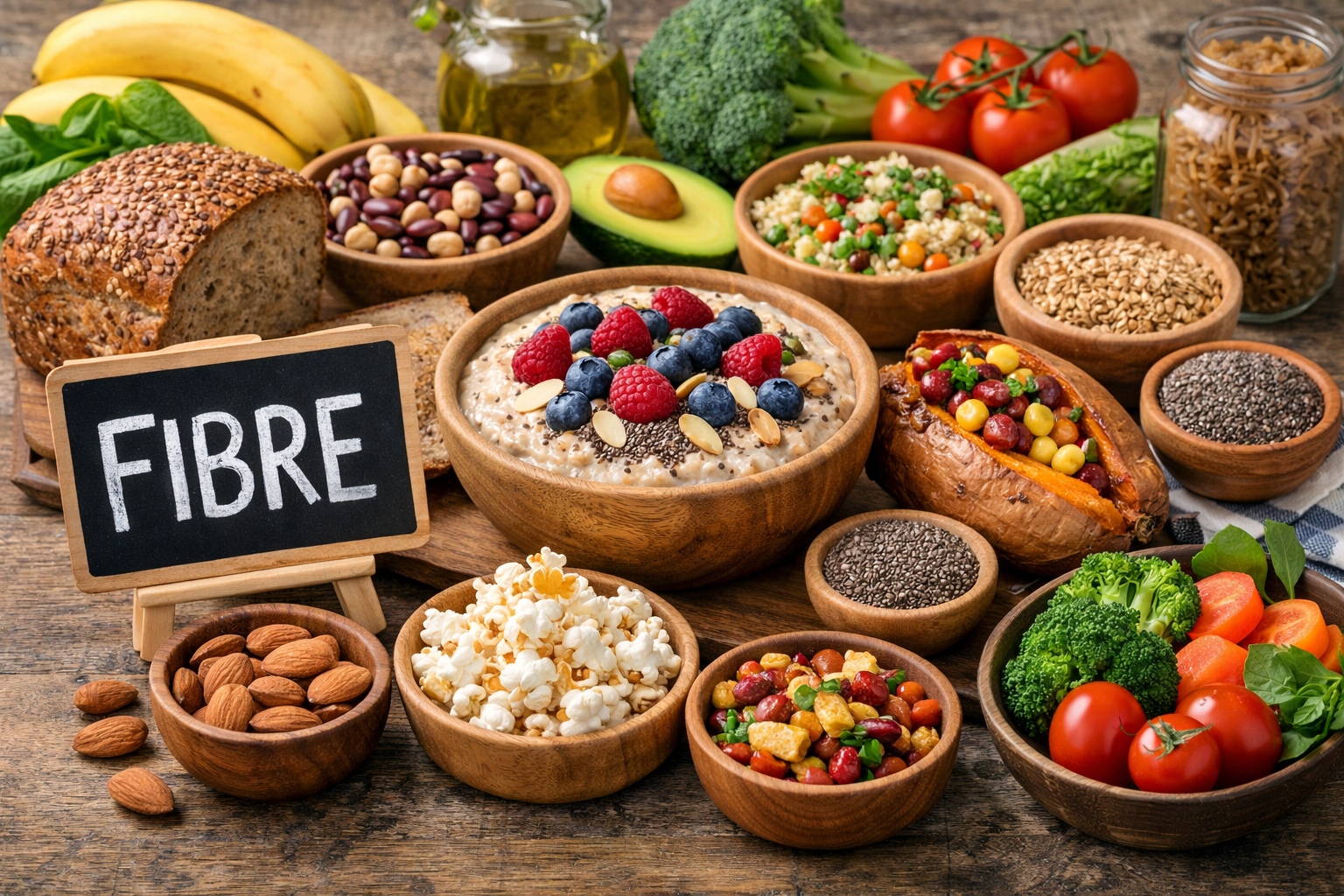
Fibre comes from plant foods, fruits, vegetables, whole grains, beans, lentils, nuts, and seeds. While many people associate fibre mainly with digestion, it does far more.
Different types of fibre play different roles:
- Some fibres feed beneficial gut bacteria, strengthening the microbiome
- Others help keep digestion moving smoothly
- Certain fibres slow sugar absorption, helping stabilize blood sugar and cholesterol
Research consistently links higher fibre intake with lower risk of heart disease, type 2 diabetes, and some cancers. There’s also growing evidence of fibre’s role in mental health through the gut–brain connection. From a gut health perspective, fibre acts as a prebiotic, nourishing the beneficial bacteria that support digestion, immunity, and mood.
Fibre hasn’t always been a headline nutrient. Unlike protein, it was never marketed as exciting. At the same time, convenience foods replaced whole grains, beans, and vegetables in many diets, naturally lowering fibre intake. The recent protein obsession may have pushed fibre even further aside, especially when animal proteins replaced plant-based options like legumes.
That’s why seeing fibre highlighted in mainstream media feels like a positive shift back toward balance and whole-food nutrition.
If your diet is currently low in fibre, start slowly and drink plenty of water as you increase intake. Small, practical swaps can make a big difference:
- Choose wholegrain or seeded bread instead of white
- Replace white rice with brown or go half-and-half
- Add beans or lentils to soups, salads, and pasta dishes
- Top porridge or yogurt with fruit, nuts, or seeds
- Snack on popcorn, almonds, or fresh fruit
- Include vegetables or hummus in sandwiches
- Choose wholegrain pasta and higher-fibre cereals
Breakfast is often an easy place to start, oats with berries and seeds offer a gentle fibre boost to begin your day.
Rather than chasing trends or numbers, focus on small, sustainable changes and notice how your body responds. For most people, simply eating more whole, plant-based foods naturally increases fibre intake, supporting gut health, energy levels, and overall wellbeing.
Sometimes the simplest changes really do make the biggest difference.
Leave a Reply