
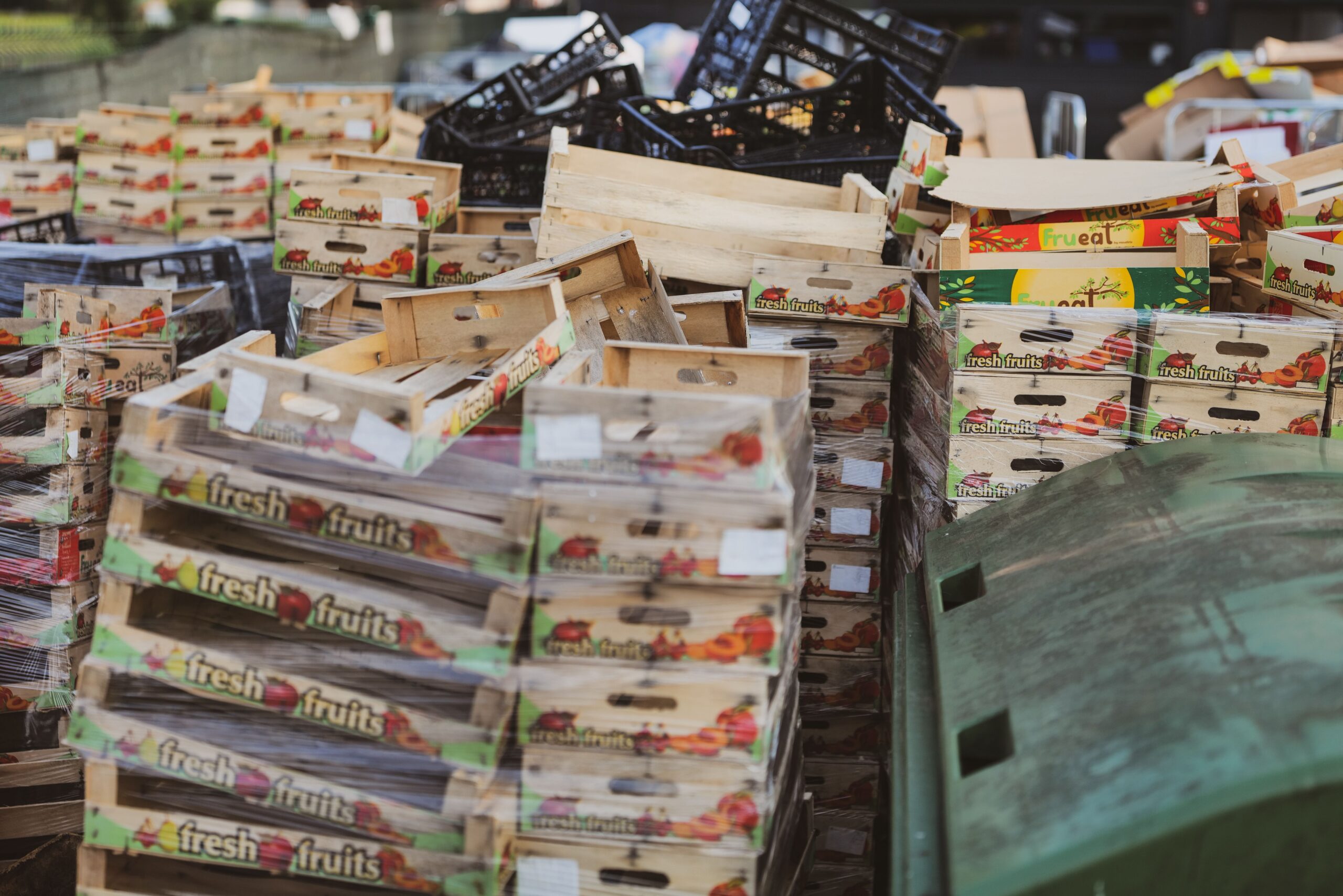
Food waste has always been one of my pet peeves. There’s something especially troubling about seeing perfectly good food discarded while so many people struggle to put meals on the table. That’s why I was inspired by a recent CBC article about Vancouver chefs TJ Conwi and Sean McDonald, who are proving that food waste and food insecurity can be tackled together.
When Good Food Goes to Waste
Many of us think of food waste as wilted lettuce or forgotten leftovers. But as chef TJ Conwi discovered while working as an executive chef in Vancouver, a staggering amount of perfectly edible food is discarded long before it ever reaches our plates.
We’re talking about crates of tomatoes, eggplants, mushrooms, and other produce that are perfectly safe and nutritious but may be the wrong shape, size, or colour for commercial standards. In Canada, nearly half of all food is wasted, and much of it is entirely avoidable.
Those numbers are hard to ignore, especially when almost one in four Canadians experiences food insecurity.
Turning a Problem into a Solution
When the pandemic disrupted the hospitality industry in 2020, Conwi found himself with access to surplus food that had already been ordered. Rather than let it go to waste, he began preparing meals for laid-off kitchen staff and friends facing financial hardship.
Along with fellow chef Sean McDonald, he co-founded ReRoot Kitchen, a Vancouver-based organization that transforms surplus ingredients into nutritious, chef-prepared meals for charities and community organizations.
Since then, ReRoot Kitchen has produced more than 500,000 meals using food rescued from farms, food service companies, and food rescue organizations.
It’s a remarkable example of what can happen when creativity meets compassion.
Surplus Doesn’t Mean Inferior
One misconception Conwi often encounters is that surplus food is somehow undesirable or destined for the compost pile.
In reality, surplus ingredients can be incredibly abundant and high quality. One recent haul included 18 large cases of mushrooms and hundreds of kilograms of spot prawn heads. Rather than going to waste, these ingredients became chowders, bisques, laksa, and rich cream sauces.
As home cooks, we can take inspiration from this resourcefulness. Vegetable stems can become soup stock. Overripe bananas turn into muffins. Leftover rice becomes fried rice or pancakes. Slightly bruised fruit is perfect in smoothies or baked goods.
Sometimes reducing food waste simply means looking at ingredients with a little more imagination.
Food Waste and Food Insecurity Are Connected
Conwi’s mission is deeply personal. Growing up in the Philippines, he experienced food insecurity himself. Today, he gives back by preparing healthy meals and snacks for children at Vancouver’s Landing Youth Centre using donated ingredients.
Sadly, the need is growing. What was once estimated at one in four children going to school hungry has now risen to one in three.
Those statistics are heartbreaking when we consider how much edible food is thrown away every day.
Food waste and hunger are often treated as separate problems, but they’re really two sides of the same coin. Every effort to rescue food helps preserve the resources, labour, water, and energy that went into producing it in the first place.
What Can We Do at Home?
Not everyone can rescue hundreds of kilograms of produce, but we can all make a difference.
Here are a few simple ways to waste less food:
Shop with a plan
Make a grocery list and buy what you’ll realistically use.
Store food properly
Proper storage can extend the life of fruits, vegetables, and leftovers.
Embrace imperfect produce
Crooked carrots and oddly shaped tomatoes are just as nutritious and delicious.
Freeze extras
Bread, herbs, berries, cooked beans, soups, and leftovers freeze beautifully.
Get creative
Soups, smoothies, casseroles, stir-fries, and grain bowls are wonderful ways to use up odds and ends.
Compost what’s truly unusable
Composting is valuable, but keeping food in the human food system whenever possible is even better.
Every Bite Matters
Stories like ReRoot Kitchen’s remind us that food has value far beyond its appearance. A slightly misshapen tomato or a surplus box of mushrooms still represents the land, water, energy, and human effort that brought it into existence.
Reducing food waste doesn’t require perfection. It simply asks us to be more mindful and more creative with what we already have.
And perhaps that’s one of the most hopeful lessons of all: sometimes the solution to two big problems—food waste and food insecurity—can begin with seeing abundance where others see scraps.
This post was inspired by a recent CBC article by Bridget Stringer-Holden about Vancouver chefs TJ Conwi and Sean McDonald and their work with ReRoot Kitchen.
Leave a Reply