Author: wpadmin

  • Is That Carb Ultra-Processed? A Kid-Friendly Test (and Some Food for Thought)

    Is That Carb Ultra-Processed? A Kid-Friendly Test (and Some Food for Thought)

    I recently read an NPR article titled Is that carb ultra-processed? Here’s a test even a kid can do,” and I thought it was worth sharing, not because I expect many of us to start soaking our bread in glasses of water, but because it sparks an important conversation about the kinds of carbohydrates we’re choosing.

    For the first time, the U.S. government is urging people to avoid “highly processed” foods, linking them to rising rates of diet-related diseases. Many people want to reduce ultra-processed foods (UPFs), but feel confused about what actually counts. Marketing doesn’t make it any easier.

    The article highlights two practical tools from Dr. Dariush Mozaffarian at Tufts University to help people assess grains and starches:

    1. The 10-to-1 Test

    For every 10 grams of carbohydrate, a food should contain at least 1 gram of fibre.

    So if a granola bar has 30 grams of carbohydrate, you’d look for at least 3 grams of fiber. This guideline helps distinguish foods made primarily from refined flour and sugars from those that still contain meaningful amounts of whole grains, bran, or seeds.

    It’s simple. It’s practical. And it’s something you can do right in the grocery store.

    2. The “Water Test”

    This one sounds fun. You place a piece of bread, cracker, or cereal in a glass of water for a few hours. If it dissolves or turns cloudy and mushy, it’s likely more highly processed. If it largely holds together, it’s more likely minimally processed.

    The science behind this relates to the plant cell wall. In intact whole grains, the fibrous cell wall acts as a protective barrier around the starch. That barrier slows digestion, helps moderate blood sugar, and allows more of the carbohydrate to reach the lower gut, where it can feed our microbiome.

    Highly processed grains, on the other hand, have often been milled, pulverized, and reconstructed in ways that remove or disrupt that natural structure. As a result, they digest quickly and can create sharper glucose and insulin spikes.

    Would I Actually Do This Test?

    Probably not on a regular basis. But I love the visual nature of it,  especially for families. It makes an abstract concept concrete. It helps us see that not all breads (or crackers or cereals) behave the same way, even if they look similar on the shelf.

    And more importantly, it shifts the focus from demonizing “carbs” to understanding structure and processing.

    Because carbohydrates themselves are not the enemy. Whole grains, beans, lentils, intact oats, and minimally processed breads can be incredibly nourishing. The issue isn’t carbohydrates, it’s what has been done to them.

    A Balanced Perspective

    While research linking ultra-processed foods to health concerns continues to grow, I’m cautious about creating fear around every packaged item. Most of us live in the real world. We balance budgets, time constraints, and family preferences.

    Rather than perfection, I encourage curiosity.

    • Could you swap one refined grain for a more intact option?
    • Could you check the fiber content when you buy bread?
    • Could you experiment with steel-cut oats instead of instant?
    • Could you try baking a loaf at home, just to taste the difference?

    Small shifts add up. So no, you don’t need to turn your kitchen into a laboratory. But if you ever feel like dropping a piece of bread into a glass of water just to see what happens… I won’t stop you.

    At the very least, it might spark a good conversation around the dinner table.

  • Winter Salsa

    Winter Salsa

    Winter Salsa

    I call this Winter Salsa because it’s made with canned tomatoes, a flavourful alternative when fresh grocery store tomatoes just aren’t at their best. It’s bright, fresh, and perfect for the colder months.
    Course Side Dish, Snack
    Cuisine Mexican
    Servings 4 cups

    Ingredients

    • 4 cups canned, diced tomatoes fire-roasted preferred
    • 1 red onion diced
    • 1 red pepper diced
    • 1 green pepper diced
    • 2 jalapenos finely chopped
    • 1 tbsp ground cumin
    • juice of one lime
    • 1/4 cup cilantro
    • salt and pepper to taste

    Instructions

    • Combine all ingredients in a large bowl and stir well to combine.
    • Allow the flavours to blend for at least 1 hour before serving.

    Notes

    Tomato Tip:
    Fire-roasted canned tomatoes add extra depth and a subtle smokiness. If your tomatoes are very juicy, you can drain them slightly for a thicker salsa.
    Heat Level:
    Remove the seeds and membranes from the jalapeños for a milder salsa, or leave them in for more heat. Start with one if you’re unsure, you can always add more.
    Make-Ahead Friendly:
    This salsa tastes even better after a few hours in the fridge as the flavours meld. It will keep well for 3-4 days.
    Serving Ideas:
    Great with tortilla chips, spooned over tacos or burrito bowls, or added to chili or grain bowls for a fresh pop.
     
  • Book Review: Outlive by Dr. Peter Attia

    Book Review: Outlive by Dr. Peter Attia

    In fall 2023, Dr. Peter Attia released Outlive: The Science and Art of Longevity, a thought-provoking read that explores how we might extend not just our lifespan, but our healthspan. While not everything he suggests will feel practical or accessible for everyone, the book offers meaningful insights into long-term health, prevention, and the choices that shape how we age.

    What I appreciate most about Outlive is how it encourages readers to reflect on the foundations of well-being and take an active role in their future health. Attia challenges aspects of our current medical system, calling for what he describes as a “Medicine 3.0” approach, one that focuses more on prevention, early intervention, and personalized care rather than simply treating disease after it appears.

    A passage that particularly resonated with me comes from his friend’s, Ric Elias, reflection on aging and mindset:

    “I think people get old when they stop thinking about the future. If you want to find someone’s true age, listen to them. If they talk about the past and they talk about all the things that happened that they did, they’ve gotten old. If they think about their dreams, their aspirations, what they’re still looking forward to – they’re young.”

    This perspective highlights something often overlooked in conversations about longevity: emotional and psychological health. For me, the final chapter, which explores emotional well-being and the inner work required for true health, was among the most meaningful parts of the book. It serves as a reminder that living well is not just about physical metrics, but also about purpose, connection, and continued growth.

    From a nutrition standpoint, readers should note that the book does not approach health from a fully plant-forward perspective. While Attia presents a range of strategies grounded in research and clinical experience, some recommendations may not align with all dietary philosophies or holistic frameworks. As with any health resource, it’s helpful to read with curiosity and discernment, taking what resonates and adapting it to your own values and needs.

    Overall, Outlive is an engaging and thought-provoking exploration of what it means to live well for longer. Even if every recommendation isn’t feasible or aligned with your personal approach, the book invites important reflection on prevention, resilience, and the habits that support long-term vitality.

  • Chocolate for Gut Health? Yes, Really – February 2026 News

    Chocolate for Gut Health? Yes, Really – February 2026 News

    In this month’s newsletter, I’m exploring one of our most loved foods, chocolate, and why it doesn’t have to be off-limits for a healthy, gut-friendly lifestyle. In the featured article, All About Chocolate: A Gut-Friendly Love Story, I share the surprising health benefits of chocolate, explain the difference between cacao and cocoa, and talk about how choosing high-quality chocolate can support both your wellbeing and your enjoyment. It’s all about taking a mindful approach and making room for foods that nourish both body and soul.

  • Dark Chocolate Nut Bar

    Dark Chocolate Nut Bar

    Dark Chocolate Nut Bar

    This chocolate bar is a simple, whole-food treat made with just a handful of nourishing ingredients. Rich cacao, naturally sweet date paste, and crunchy toasted nuts come together for a satisfying no-bake snack with no refined sugar. Easy to customize with your favourite nuts or mix-ins, it’s a delicious option for a wholesome dessert or energizing bite.
    Total Time 1 hour 30 minutes
    Servings 16

    Ingredients

    • 1 cup Cacao Butter
    • 1 cup Cacao Powder
    • 1 cup Date Paste
    • 1 tsp Vanilla Extract or powder
    • 1 cup Mixed Nuts toasted and coarsely chopped

    Instructions

    • Line a rimmed baking sheet with parchment paper and set aside.
    • In a small saucepan over low heat, melt the cacao butter, stirring occasionally, about 3 minutes.
    • Remove from heat and whisk in the cacao powder, date paste, and vanilla until completely smooth and no clumps remain. Stir in the mixed nuts.
    • Using a rubber spatula, scrape the mixture onto the prepared baking sheet and spread into a square to your desired thickness.
    • Chill in the refrigerator for 1 hour, or until firm.
    • Cut into desired pieces. Store in an airtight container in the refrigerator for up to one month.

    Notes

    Toasting the nuts
    Toasting enhances flavour and adds extra crunch. Spread nuts in a single layer on a baking sheet and bake at 350°F (175°C) for 8–12 minutes, stirring halfway, until fragrant and lightly golden. Let cool before chopping and adding to the mixture.
    What nuts to use
    Use any nuts you enjoy. For this recipe, a mix of cashews, almonds, and pecans provides a balance of creaminess and crunch. Walnuts, hazelnuts, peanuts, or pistachios also work well.
    Try other mix-ins
    You can replace some or all of the nuts with other crunchy ingredients like puffed rice or puffed quinoa for a lighter texture. Unsweetened shredded coconut, pumpkin seeds, or sunflower seeds are also good options.
    Date paste
    You can easily make your own by blending 1 cup pitted Medjool dates with ½ cup warm water until smooth, adding more water as needed to reach a thick, spreadable consistency.
    Cacao vs. cocoa
    Cacao powder is typically less processed and retains more of its natural antioxidants, giving a richer, slightly more bitter chocolate flavour. Cocoa powder is more processed and has a milder taste. Either can be used in this recipe.
  • Taco Night! Plant-Based Flavour Fiesta

    Taco Night! Plant-Based Flavour Fiesta

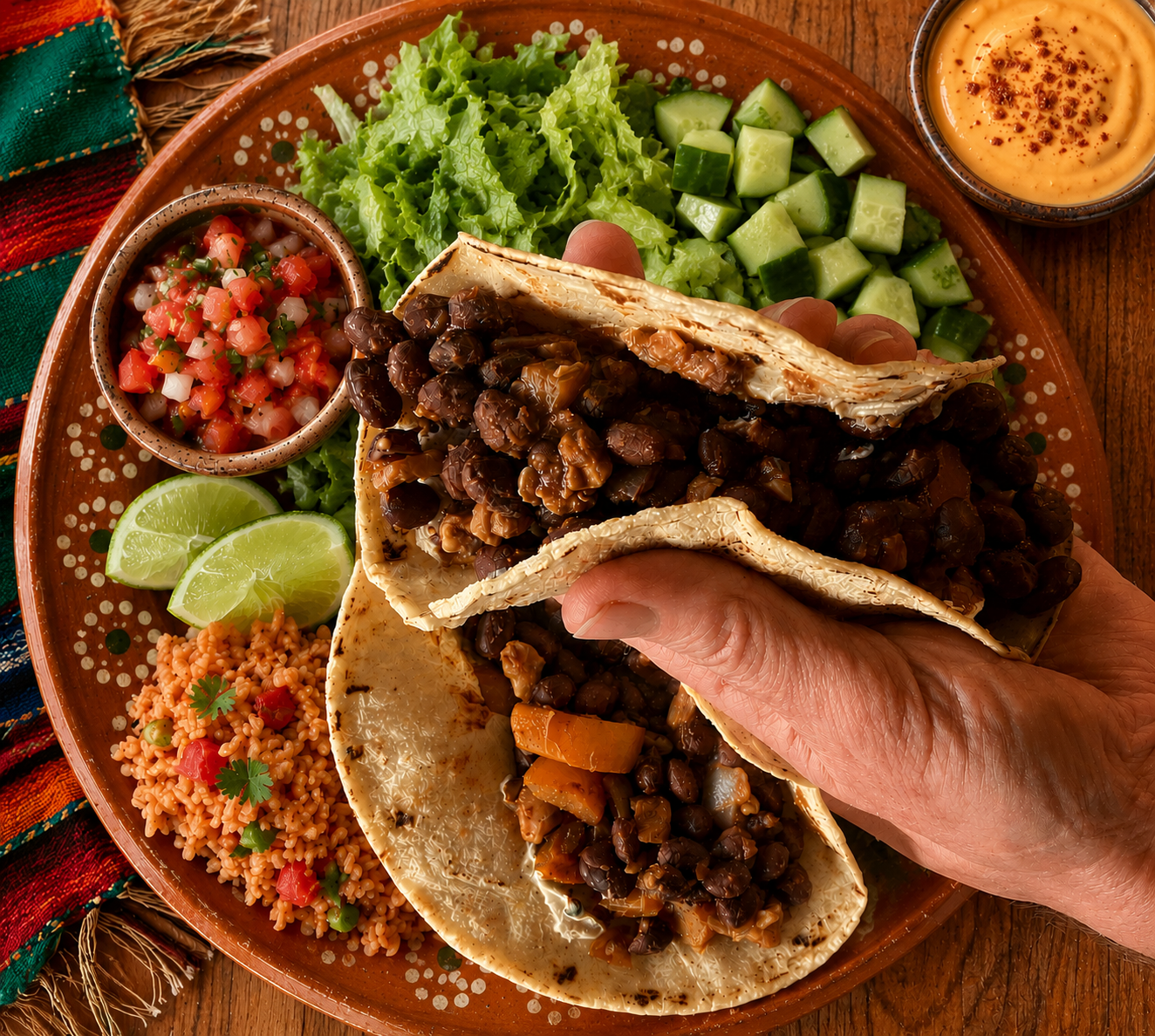
    Cancelled: Join me for a hands-on class celebrating plant-based tacos! We’ll make hearty Black Bean Tacos, flavourful Mexican Brown Rice, creamy Chipotle Cashew Cheese, and finish with a rich, indulgent Chocolate Cake. Everything is gluten-free and made with whole-food ingredients, no refined sugars or oils. Learn tips and tricks to bring bold, satisfying flavours to your plant-based meals.

    Tues Feb 17, 2026 6-9pm $110

    North Saanich Middle School, 10400 McDonald Park Rd.

  • Chocolate Almond Butter Date Bark

    Chocolate Almond Butter Date Bark

    Chocolate Almond Butter Date Bark

    This variation of a popular treat, which is making its way around social media right now, is afun alternative to those made with peanut butter. I add just a touch of almond extract togive the bark a little kick.
    Course Dessert, Snack
    Servings 12
    Author Chef Del Sroufe

    Ingredients

    • 10-12 pitted medjool dates
    • ¼ cup creamy almond butter
    • ½ cup vegan dark chocolate chips
    • 2 tsp creamy almond butter
    • ½ tsp almond extract
    • 3 Tbsp chopped toasted almonds

    Instructions

    • Line an eight-inch square baking sheet with parchment paper (or use a silicone pan).
    • Split the dates open and smash each one down onto the sheet, making sure they overlap a little so they stick together*. The bottom of a glass or coffee cup works well for this.
    • Spread the ¼ cup almond butter over the dates.
    • Melt the chocolate with the 2 tsp almond butter, add the almond extract, mix well, and spread it over the almond butter layer.
    • Sprinkle the chopped almonds over the melted chocolate.
    • Place the baking sheet into the freezer for 15 to 20 minutes, or until the chocolate has set.
    • Remove from the freezer and break the bark into pieces.
    • Store refrigerated in an airtight container for up to 4 days.

    Notes

    *If your dates are too dry and don’t stick together easily, moisten your hands, and press down
    on the dates.
  • 2026/05/12: From Farm to Fork – A Spring Harvest Dinner

    2026/05/12: From Farm to Fork – A Spring Harvest Dinner

    Cook with the best of Vancouver Island’s spring bounty in this whole-food plant-based, gluten-free class. Using fresh seasonal produce, you’ll create a complete dinner: salad, sides, plant protein, and dessert. The final menu will be inspired by whatever looks freshest the week before class. Come cook, taste, and celebrate the flavours of spring!

    North Saanich Middle School, 10400 McDonald Park Rd.

    Tues May 12, 2026 6-9:00pm $110

    Register through Panorama Rec

  • Fibre in the Spotlight: A Refreshing Shift After All the Protein Hype

    Fibre in the Spotlight: A Refreshing Shift After All the Protein Hype

    I recently came across a BBC article titled “Is fibre the new protein? The surprising health benefits of the latest wellness trend” and I have to say, it made me genuinely excited to see fibre finally getting some well-deserved mainstream attention.

    After years of protein being the star of the nutrition world (protein bars, protein coffee, protein everything!), it’s refreshing to see the conversation shift toward fibre, a nutrient that quietly supports gut health, blood sugar balance, immunity, and even mental wellbeing. This isn’t just another social media trend; it’s backed by decades of research.

    Most adults are encouraged to aim for around 30 grams of fibre per day, yet the average intake is closer to half that. With modern diets leaning heavily toward ultra-processed foods, it’s no surprise fibre has been left behind.

    Fibre comes from plant foods, fruits, vegetables, whole grains, beans, lentils, nuts, and seeds. While many people associate fibre mainly with digestion, it does far more.

    Different types of fibre play different roles:

    • Some fibres feed beneficial gut bacteria, strengthening the microbiome
    • Others help keep digestion moving smoothly
    • Certain fibres slow sugar absorption, helping stabilize blood sugar and cholesterol

    Research consistently links higher fibre intake with lower risk of heart disease, type 2 diabetes, and some cancers. There’s also growing evidence of fibre’s role in mental health through the gut–brain connection. From a gut health perspective, fibre acts as a prebiotic, nourishing the beneficial bacteria that support digestion, immunity, and mood.

    Fibre hasn’t always been a headline nutrient. Unlike protein, it was never marketed as exciting. At the same time, convenience foods replaced whole grains, beans, and vegetables in many diets, naturally lowering fibre intake. The recent protein obsession may have pushed fibre even further aside, especially when animal proteins replaced plant-based options like legumes.

    That’s why seeing fibre highlighted in mainstream media feels like a positive shift back toward balance and whole-food nutrition.

    If your diet is currently low in fibre, start slowly and drink plenty of water as you increase intake. Small, practical swaps can make a big difference:

    • Choose wholegrain or seeded bread instead of white
    • Replace white rice with brown or go half-and-half
    • Add beans or lentils to soups, salads, and pasta dishes
    • Top porridge or yogurt with fruit, nuts, or seeds
    • Snack on popcorn, almonds, or fresh fruit
    • Include vegetables or hummus in sandwiches
    • Choose wholegrain pasta and higher-fibre cereals

    Breakfast is often an easy place to start, oats with berries and seeds offer a gentle fibre boost to begin your day.

    Rather than chasing trends or numbers, focus on small, sustainable changes and notice how your body responds. For most people, simply eating more whole, plant-based foods naturally increases fibre intake, supporting gut health, energy levels, and overall wellbeing.

    Sometimes the simplest changes really do make the biggest difference.

  • Cooking Testimonial 10

    “It was great to cook in pairs, so we could work out the recipe. Fun, fun, fun!”