
Quick, what’s your first reaction when you read the word stress? Do you start to feel jittery, notice your muscles tensing, or feel your heart rate increase? Most of us associate stress with something negative. But what if certain types of stress could actually benefit our health?
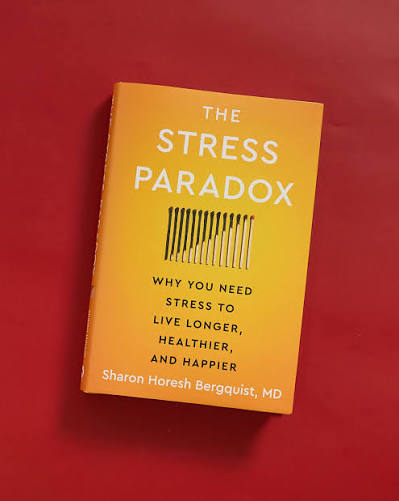
In The Stress Paradox, Dr. Sharon Horesh Bergquist explores how our bodies need the right kinds of stress to thrive. She’s not talking about chronic or overwhelming stress, but rather small, manageable challenges that activate our cells’ natural defence and repair mechanisms.
So, what kinds of stress are we talking about? Bergquist focuses on five key areas:
- Eat a variety of plant “toxins” (naturally occurring compounds in plants that can activate the body’s protective responses)
- Practice intermittent bursts of movement (challenge your body with periods of activity rather than remaining sedentary)
- Experience extremes of heat and cold (expose the body to temperature changes that stimulate adaptive responses)
- Endure periods of food scarcity (explore periods without food, rather than eating continuously throughout the day)
- Engage in deliberate psychological challenges (step outside your comfort zone and challenge your mind)
At the heart of the book is the concept of hormesis. Bergquist defines it as “the science of how certain stressors, the right kind, at the right intensity, and for the right duration, activate built-in defenses that protect, repair, and regenerate our bodies.”
The book is divided into four parts. The first explains the science behind beneficial stress, how modern lifestyles have reduced our exposure to some of these challenges, and why reintroducing them may be helpful. The second explores the key stressors in more detail, including how to choose the right type, intensity, and duration. In the third part, Bergquist looks at how hormetic stress may help us age well, prevent and manage disease, and support energy, mental clarity, mood, and pain management.
The final part presents the Stress Paradox Protocol, a comprehensive guide to incorporating these principles into everyday life. It offers practical suggestions for putting the book’s ideas into action. I was also happy to see that the final chapter includes recipes by Ashley Madden, one of my favourite whole-food, plant-based cookbook authors.
The section on cold therapy was probably the most interesting for me personally. I’ve certainly heard people rave about ice baths and cold plunges, but cold has always made my body seize up, so this is an area where I have some work to do! I’ve been trying to build up to 30 seconds of cold water at the end of my shower, but even that is a real challenge. This one is going to be a slow process, but the book has encouraged me to explore it at my own pace and see how I adapt over time.
I found the first part of the book quite technical, so readers who prefer to get straight to the practical advice may find it a bit heavy going. However, I think the second half will appeal to a much broader audience, particularly those looking for practical ways to support their health as they age.
Overall, The Stress Paradox offers an interesting perspective on stress and challenges the idea that we should always try to avoid discomfort. If you’re interested in improving your health and learning how to incorporate beneficial stressors into your daily life, the Stress Paradox Protocol is well worth exploring.
Leave a Reply